There is a particular kind of confidence that comes from having fixed a leaking tap. You tighten one thing, the leak stops, you walk away feeling like a plumber. The problem arrives three weeks later when the pipe behind the wall has been quietly splitting because you overtightened the fitting. You fixed the symptom. You created another cause.
I think about this whenever someone says they want to run the government like a business.
It is a seductive idea. Governments are, by most observable metrics, spectacularly inefficient. Forms multiply. Decisions gestate. Committees convene to discuss the committees that will eventually discuss the thing. A private company that operated this way would be acquired, gutted, and rebranded within a fiscal year. So the logic follows: bring in a CEO type, someone who moves fast, cuts what doesn’t work, surrounds himself with executors rather than deliberators, and ships results.
The logic is clean. The analogy is wrong. And the wrongness is not minor — it is a precise mixup of institutional versus personal ethics.
What a CEO Actually Is
A CEO operates inside a system he did not build and cannot dismantle. He has a board above him. He has shareholders who can price him out of relevance. He has regulators who will fine, suspend, or prosecute him if he crosses certain lines. And critically — crucially — he has courts.
When a CEO makes a decision that harms stakeholders, the courts exist as an independent authority that can compensate the harmed, restrain the executive, and in extreme cases, end the company. The CEO does not like this. He complains about regulatory overreach and activist judges and frivolous litigation. But the system that constrains him is also the system that protects him. If a competitor defrauds him, he can sue. If an employee falsely defames him, he can sue. The court is not his enemy. The court is the infrastructure he swims in.
Now consider the President.
The President is not inside a system in the same way. The President, the Congress, and the Judiciary together are the system. There is no higher authority to appeal to when the system breaks down. There is no external court that the American democratic structure can drag itself before. The three branches are not just the operators of the machine — they are, in the most literal sense, the machine.
This means that when a President erodes the judiciary’s authority — by ignoring rulings, by publicly delegitimizing judges, by appointing officials whose stated purpose is to contest the independence of the bench — he is not fighting the referee. He is dismantling the ground.
The CEO can fall out with the referee and still have a game to play. The President who destroys the referee has no game left. He has a field.
The Specific Madness of Running Government Like a Business
The efficiency argument against government is not wrong on its face. Government is slow. Deliberately, architecturally, intentionally slow. The founders built the slowness in.
James Madison, who was not a man given to comedy, essentially wrote in Federalist No. 51 that the Constitution was designed for people who could not be trusted. Not this person or that person — people. All of them. The whole species. Ambition must be made to counteract ambition, he wrote, and this was not a lament. It was the blueprint. You build a system that works even when everyone inside it is trying to extract personal advantage, and you have built something durable. You build a system that depends on the virtue of its operators, and you have built a very nice-looking problem.
A business runs on a shorter loop. Quarterly results provide external, ruthless, non-negotiable feedback. The market does not care whether the CEO is loyal or brilliant or surrounded by yes-men. It prices the outcome. The feedback mechanism is external and it bites.
Government’s outputs are largely invisible. They are the wars that didn’t start, the pandemics that didn’t spread, the economic crises that were managed before they became catastrophes, the institutions that held. You cannot put “democracy did not collapse this quarter” on a shareholder report. The efficiency of government is measured in prevented disasters, and prevented disasters do not generate applause. This makes government permanently vulnerable to the charge that it is doing nothing, even when it is doing the hardest thing — which is holding a complex society together without visible drama.
When you apply the CEO model to this, you get a specific kind of dysfunction. You get a leader who optimises for visible action over invisible stability. You get the dramatic cancellation of things that could be seen, in place of the patient maintenance of things that cannot. You get speed where the architecture demands deliberation.
And you get a leader who, because he has selected for loyalty over competence in his inner circle, receives no honest critique.
Sycophancy Is a Manageable Problem for a CEO. It Is an Existential One for a President.
A CEO surrounded by yes-men can still be corrected by the market. The quarterly report arrives and it does not flatter. The share price does not care about the mood in the boardroom. The CEO may ignore his advisors’ warnings but he cannot ignore a collapsing stock.
A President surrounded by yes-men has no equivalent external corrective — unless you count elections, which arrive every four years and are increasingly contested as legitimate measures of trends fuelled by culture wars.
The honest critique that a President requires is not a nicety. It is the feedback mechanism that replaces the market signal. When inspectors general are fired, when career officials are replaced with loyalists, when the intelligence community is reorganised around political alignment rather than analytical independence — you are not streamlining the executive branch. You are removing the instruments that tell the pilot the altitude is wrong.
This has happened in measurable, documented ways. In early 2025, the Trump administration dismissed more than a dozen inspectors general across federal agencies — the internal watchdogs whose specific constitutional function is to tell the executive when its own departments are going wrong. This was done, in many cases, without the 30-day congressional notice required by law. The courts later ruled several of these firings unlawful.
Notice the tense of that sentence? The courts ruled the firings unlawful. The firings happened anyway. The correction arrived after the damage. And the correction itself was contested as illegitimate by the same executive it was correcting.
This is not the CEO fighting the referee. This is the CEO firing the referee and then arguing that games don’t need referees.
Social Authority and the Necessary Illusion That Isn’t
Here is a thing about democracy that is genuinely strange when you look at it directly.
It functions because people believe it functions.
This sounds like a weakness. It is, in fact, the most sophisticated governing technology ever developed, and also its most fragile component. The authority of a court ruling does not come from the bailiff standing at the door. It comes from the collective agreement — maintained across millions of citizens, attorneys, officials, and power-holders — that rulings carry binding force. The moment enough of those people decide that a ruling is optional, the ruling is optional. The bailiff cannot arrest an entire country.
Money works the same way. A hundred-rupee note is a piece of paper with a promise printed on it. Its value is the collective belief in the promise. This is not an illusion in the pejorative sense. It is a constitutive belief — the belief is what creates the thing it believes in. And once created and maintained, it is as real as anything material.
The authority of democratic institutions is this kind of reality. It requires constant maintenance through the behaviour of those inside the system — behaviour that signals, each time, that the rules apply to everyone including the rule-makers.
When a President publicly attacks a judge as a “radical left lunatic” for ruling against him — which happened more than once — he is not merely criticising a decision. He is withdrawing, in public, the signal that the judiciary’s authority is legitimate. Each withdrawal is small. The accumulation is the erosion.
And here is the thing about erosion: it does not announce its threshold. You do not get a notification that says “social authority of judiciary now at 67%, approaching critical.” You get a long period of apparent normalcy followed by a moment where a ruling is simply not obeyed and nothing happens, and that moment is the threshold, and you passed it without knowing.
Sawing the Branch
The President who erodes democratic institutions is not weakening his opponents. He is weakening the structure that makes his own authority meaningful.
A President’s power is not physical. He does not personally enforce anything. His orders are carried out because the system that produces compliance — law, legitimacy, institutional loyalty — is intact. The moment that system is sufficiently degraded, the President’s orders become requests. Loud requests, perhaps. Requests with consequences attached. But requests.
This is the sawing-the-branch problem. The branch is the institutional legitimacy that makes presidential authority real. Each act of erosion — each fired watchdog, each ignored court ruling, each attack on the press as enemy of the people, each deployment of federal agencies for partisan purposes — removes material from the branch. The President sits on the branch. He feels more powerful with each stroke because the opposition is weakened. He does not feel the branch thinning beneath him because the effect is gradual and the immediate sensation is of increased freedom.
There is a reason authoritarian consolidators historically end badly even when they succeed in the short term. They build systems that depend entirely on their personal authority rather than institutional legitimacy. Those systems are stable until they are not, and when they are not, they are catastrophically not, because there is no distributed institutional resilience left to absorb the shock.
The democratic system — for all its maddening slowness and procedural excess — is a distributed resilience machine. It is designed to survive bad leaders because the authority is not concentrated in the leader. Undermining that distribution is not strength. It is a single point of failure being installed where redundancy existed.
When Coalition Math Becomes Architectural Risk
There is a specific political-structural issue that accelerates all of the above.
The ruling coalition, as it currently operates, has made a calculation: deliver the policy outcomes that matter to the base, including positions that originate from a relatively small but intensely motivated faction, in exchange for electoral loyalty. This is not unusual in democratic politics. Every coalition makes compromises to maintain itself in power.
The problem is that some of the asks from the said faction are not policy positions. They are structural. Weakening independent oversight. Contesting electoral mechanisms. Restricting the operational independence of courts. These are not positions on taxation or immigration or foreign policy — they are positions on the architecture of the game itself.
When you trade away pieces of the game’s architecture for electoral advantage, you are making a category error as serious as the CEO-government confusion. You are treating the rules of the game as a resource to be spent, rather than the condition for the game existing.
And the faction that demanded these trades will not rescue you when the branch breaks. They will find the next person willing to make the same trades.
Elite Defection and Why the President’s Own Interests Are Not Being Served
Here is the closing irony, and it is a fairly brutal one.
The erosion of institutional authority does not only harm the opposition, the press, the judiciary, and democratic governance in the abstract. It directly increases the probability of elite defection, which is historically the single most dangerous development for any consolidating executive.
Business elites, military leadership, senior officials, and legal institutions currently comply with executive overreach through a calculation: the cost of resistance exceeds the cost of accommodation. This calculation holds as long as the executive appears stable, the system appears functional, and the personal cost of defection is visible and immediate.
The moment institutional erosion becomes visible enough — the moment the branch is audibly creaking — that calculation inverts. A CEO facing personal liability will find a court. A general facing an unlawful order has the Uniform Code. A business elite watching policy instability destroy the predictable regulatory environment that makes investment possible will move capital. Not as an act of heroism. As rational self-interest.
The President who has eroded the institutions that would have provided legitimate channels for managed opposition has not eliminated opposition. He has concentrated it and raised its stakes. Managed opposition through functioning institutions is a release valve. Remove the valve and the pressure builds until it finds a different exit.
The founders understood this. They were not designing a system for philosophers. They were designing a system for the full range of human ambition and frailty, including their own. The checks were not constraints on good leadership. They were the conditions for good leadership surviving long enough to matter.
—
I started with a leaking tap. I will end there.
The man who overtightens the fitting feels he has solved democracy’s inefficiency problem with the executive instincts of a business leader. He has solved the visible problem and created the invisible one. The wall conceals the damage. The next person to live in the house finds it.
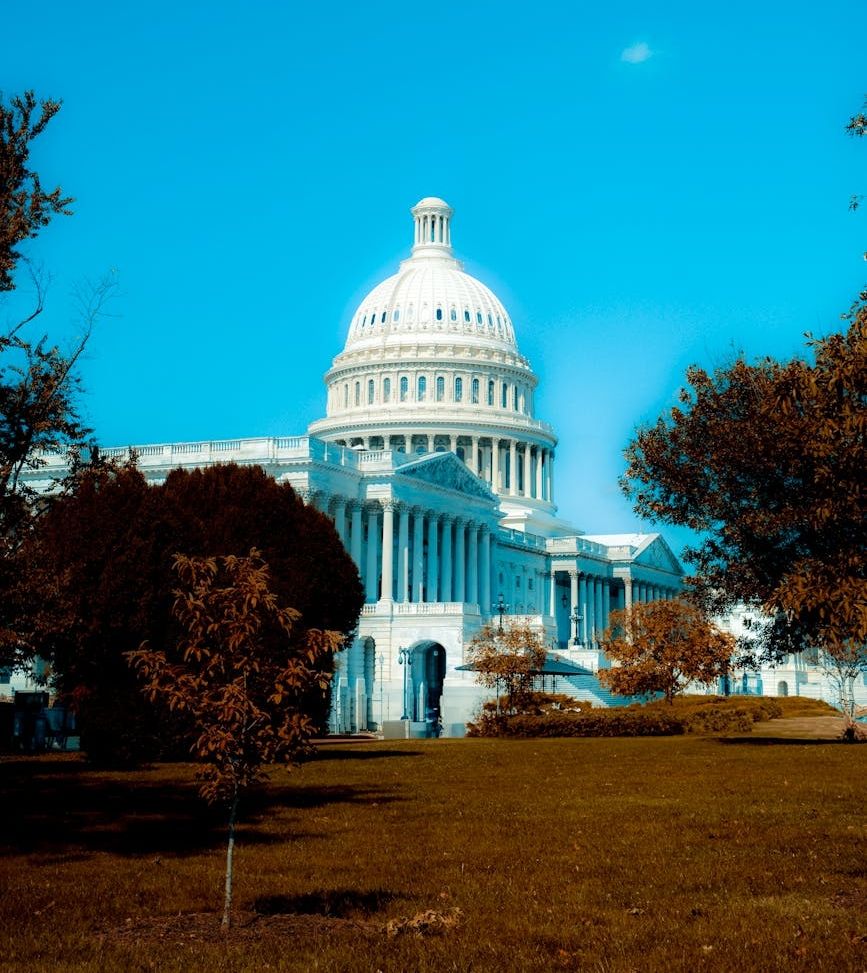
Except in this case, about 350 million people live in the house.
And most of them have been hearing something behind the wall for a while now.
 comically
Leave a comment