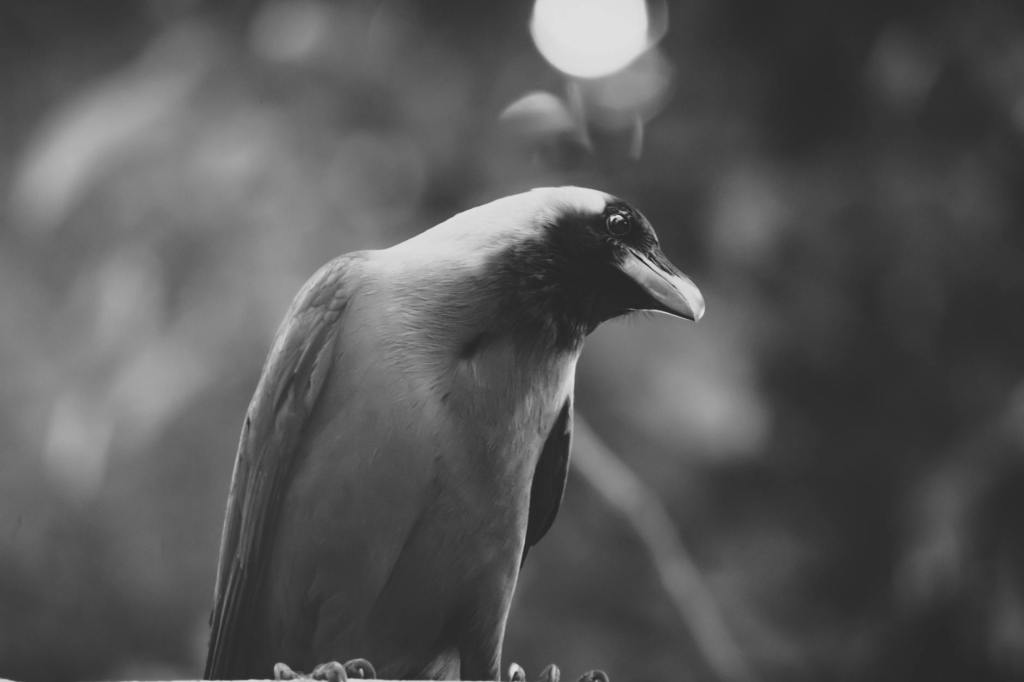
Habitat and Ecology of Corvid Species in South India
Habitat and Ecology of Corvid Species in South India
Abstract
The Corvus genus, which includes crows and ravens, represents a diverse and highly adaptable group of birds with a global distribution. This paper examines the specific habitat preferences and ecological niches of key corvid species found in South India, with a particular focus on the House Crow (Corvus splendens) and the Indian Jungle Crow (Corvus culminatus). While the Common Raven (Corvus corax) has a limited and historical presence in the northwestern parts of the Indian subcontinent, its habitat differs significantly from that of its crow relatives in the southern region. The analysis reveals that crows in South India are highly successful due to their opportunistic omnivorous diet and a close association with human settlements, a key factor in their habitat selection and population dynamics. This paper synthesizes existing research on the distribution, behavioral ecology, and nesting habits of these species, highlighting the impact of urbanization on their survival and proliferation.
Introduction
The family Corvidae, comprising crows, ravens, jays, and magpies, is renowned for its intelligence, complex social behaviors, and remarkable adaptability (Marzluff & Angell, 2005). Within the Indian subcontinent, and specifically in the southern regions, the most prevalent members of this family are the House Crow (Corvus splendens) and the Indian Jungle Crow (Corvus culminatus). Both species have successfully colonized a variety of environments, but their habitat choices reflect distinct ecological strategies. Understanding their habitat preferences is crucial for comprehending their ecological roles and the dynamics of human-wildlife interaction in one of the world’s most densely populated regions.
Corvid Species of South India
While the term “crow” is often used generically, several species exist with specific characteristics. The key species found in South India are:
- House Crow (Corvus splendens): A medium-sized corvid with glossy black plumage and a distinctive grey neck collar. This species is strongly commensal with humans, meaning it thrives in close association with human habitats. The subspecies C. s. protegatus is specifically found in southern India, Sri Lanka, and the Maldives, and is noted for its darker grey collar.
- Indian Jungle Crow (Corvus culminatus): This species is a large, all-black crow found throughout the Indian subcontinent south of the Himalayas. It is a distinct species from the Large-billed Crow (Corvus macrorhynchos) found in higher elevations. The Indian Jungle Crow is known for its robust size and its presence in both urban and more natural, forested environments.
- Common Raven (Corvus corax): The Common Raven has a wide distribution across the northern hemisphere. However, its range in the Indian subcontinent is largely restricted to the Himalayas and northwestern India (Animal Diversity Web, n.d.). As such, it is not a resident species of South India, and its habitat preferences for open landscapes, rocky cliffs, and high altitudes differ greatly from the crows found in the southern peninsula.
Habitat and Ecological Adaptations
The habitat of corvids in South India is largely dictated by the availability of resources, which in the case of the House Crow and Indian Jungle Crow, is often a direct result of human activity.
- House Crow: The House Crow is a prime example of an urban-adapted species. Its habitat is nearly exclusively tied to human settlements, ranging from small villages to bustling metropolises. It is an opportunistic omnivore, scavenging on human food waste, which is a major driver of its proliferation. This species requires trees for nesting and roosting, but it is highly adaptable, often utilizing man-made structures like telephone towers and antennas (worldwidejournals.com, n.d.). Communal roosting sites are common, often in well-lit, busy areas, suggesting a preference for urban safety and proximity to food sources.
- Indian Jungle Crow: While also found in urban areas, the Indian Jungle Crow demonstrates a greater range of habitat adaptability than its House Crow counterpart. It inhabits a mix of environments, including woodlands, cultivated areas, parks, and even forests. It is an opportunist, but its diet is broader, including insects, small animals, and plant matter, in addition to carrion and food scraps. Its nesting habits also reflect a slightly different ecological niche, with nests typically built in large trees and rarely on buildings, as is sometimes the case with House Crows (Wikipedia, n.d.). The breeding season for the Indian Jungle Crow in South India occurs earlier than in the north, typically from March to April.
Conclusion
The study of raven and crow habitats in South India reveals a clear distinction between the species present. The Common Raven is a non-resident in the region, its presence limited to the northern, mountainous parts of the subcontinent. In contrast, the crows of South India—primarily the House Crow and the Indian Jungle Crow—have flourished by exploiting the ecological opportunities presented by a human-dominated landscape. The House Crow’s habitat is almost entirely an extension of the human environment, a testament to its successful commensal relationship. The Indian Jungle Crow, while also adapting to urban life, maintains a broader presence in more natural and semi-natural habitats. This specialization and adaptation to varying degrees of human presence are key to understanding the success and widespread distribution of these intelligent and resilient birds in South India.
References
Animal Diversity Web. (n.d.). Corvus corax (common raven). Retrieved from https://animaldiversity.org/accounts/Corvus_corax/
Marzluff, J. M., & Angell, T. (2005). In the company of crows and ravens. Yale University Press.
worldwidejournals.com. (n.d.). Review on Eco-Biology of the House Crow, Corvus Splendens (Vieillot, 1816), (Corvidae: Passeriformes). Retrieved from https://www.worldwidejournals.com/international-journal-of-scientific-research-(IJSR)/recent_issues_pdf/2014/June/June_2014_1401775940_da143_165.pdf
Wikipedia. (n.d.). Indian jungle crow. Retrieved from https://en.wikipedia.org/wiki/Indian_jungle_crow
 comically