By Lakshmi | life and reflection—funny side up
Benjamin Zephaniah didn’t just write poetry. He beat it into the air like a rebel drum, making sure every syllable had rhythm, resistance, and roots. You don’t read a Zephaniah poem—you overhear it like a secret the establishment didn’t want you to know. He was, is, and always will be—unapologetically public. Like rain on a protest march, he arrives exactly when the moment demands poetry, not as decoration, but as demolition.
One of his lines still rings in my ears like a conscience on surround sound:
“If we can laugh together, we can live together.”
Zephaniah wrote that for a Britain breaking itself apart at the seams of race, class, and cruelty. But tell me, is there a single WhatsApp group today where this sentence wouldn’t be considered either satire or fantasy?
The People’s Poet
He once said he wanted to be a people’s poet, not a poet’s poet. The kind who didn’t need you to understand metaphors before breakfast or own a bookshelf taller than your toddler. His verse walked barefoot, often in dreadlocks, always in protest. It gave vocabulary to silence.
From his poem The British—a culinary satire about multiculturalism masquerading as a recipe:
“Take some Picts, Celts and Silures,
And let them settle.
Then overrun them with Roman conquerors…”
And it goes on, remixing history like a DJ who doesn’t care if your empire can’t take a joke.
This is how Zephaniah works. He feeds you humour, and before you can swallow, he tosses in a truth so raw it scrapes the back of your throat.
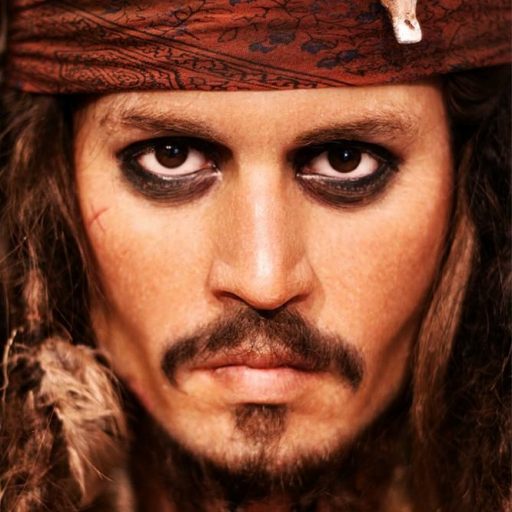
Captn Jack Sparrow is yet another incarnation of Zephaniah
When Poetry Refuses to Behave
He rejected an OBE, saying:
“Me? I thought, OBE me? Up yours, I thought.“
Imagine that. Saying no to the Queen with a verse. Not because he didn’t respect art, but because art, for him, was activism. You don’t put a bow tie on resistance. You let it dance in Doc Martens, shout in Jamaican patois, and recite its own history—unfiltered.
The Curriculum and the Conscience
He said:
“I am a poet, not a politician, but if I can speak the truth better than those who are paid to, maybe the problem isn’t me.“
Some school boards wanted him out of textbooks. He wanted children to write poems about knives and playgrounds and politicians—because how else will we grow adults who aren’t afraid to speak?
In a world where most of us are online but not heard, his poetry reminds us: writing is not about elegance. It’s about elbowing your way into a system that wants you invisible and saying, “Oi. Listen.”
And Now, a Koan
Let me not tie this up with a moral. That’s not Zephaniah’s way. Instead, I’ll leave you with a koan—something to not answer, just carry:
If silence is golden, who profits when the poets go quiet?
Until next verse,
Lakshmi
funny side up, always slightly burnt at the edges
Footnotes
- Poems cited from: The British, Talking Turkeys, public interviews
- Recommended reading: Too Black, Too Strong, We Are Britain!, Propa Propaganda
- Listen to Dis Poetry: https://you4tu.be/iHi6wIDaT1Y?si=WdriaBT1ecZbBr_whttps://youtu.be/iHi6wIDaT1Y?si=WdriaBT1ecZbBr_w
 comically
Leave a comment