There’s a moment in the IKEA showroom—somewhere between the fake bathroom with the fake toothbrush and the mini-living room with the mini-cactus—when you realise you’re not shopping anymore. You’re participating in a well-designed, Swedish-engineered psychological experiment. At the Nagasandra outlet, this moment comes approximately 42 minutes after entering, and exactly 2.3 km of showroom walking later. That’s when your trolley has acquired two cushions you don’t need, a lamp that doesn’t fit any socket in India, and four tealight holders that serve no known function but are apparently very IKEA.
You came for a shoe rack.
But like the poor, debt-ridden contestants of Squid Game, you too entered voluntarily, thinking you had control. Silly you. The first game was Red Light, Green Light, except here it was “Look Left, Buy Right.” You’d freeze at every display, hypnotised by the lighting and lifestyle dreams.
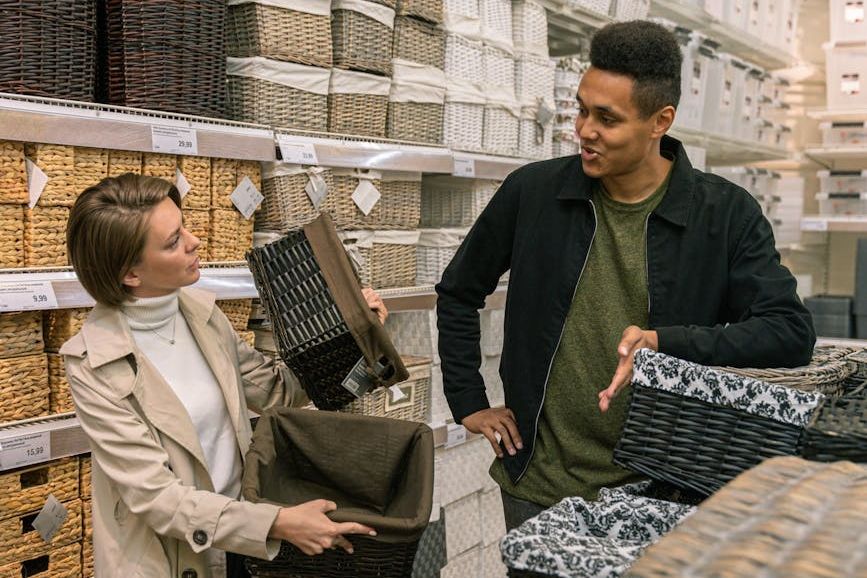
The second game? Survive the Market Hall. No exit. No escape. Just a looping labyrinth where you slowly lose your identity to minimalist utensils and jars with unpronounceable names like “GRÖNSAKER” and “BÖRJE.” Somewhere near the fake potted plant aisle, I accepted my fate. IKEA wasn’t just a store—it was an immersive Nordic theatre of consumerism where the survival of your wallet was inversely proportional to the number of soft-close drawers you opened.
And just when you think it’s over, there’s the final boss battle: the Food Court. Meatballs, lingonberry, almond cake, samosa. It’s like going to Sweden via Kempegowda Circle. Beautiful, confusing, and slightly existential.
And then you leave. Having paid, having eaten, having forgotten why you even came.
IKEA is not a furniture store. It’s a metaphor for life in late capitalism. It promises utility and elegance—just like adulthood. The choices are infinite, but the path is fixed. You walk the serpentine trail, nudged by arrows and ambient jazz, believing in your agency while being watched by security cameras and internal doubt.
Squid Game understood this. It replaced play with pain, and freedom with spectacle. IKEA flips the script—here, survival is aesthetic. You don’t die; you decorate. But both demand your choices under pressure. Both offer a prize. And both, crucially, leave you changed.
When you build the flatpack shelf at 11:47 pm with an Allen key and regret, remember: you were a contestant too.
Just… with better lighting.
 comically
Leave a comment